- Timeframe
- June 2026 to August 2026
- Team
- Mission College, Thrust Stack, a faculty-advised 4-student research team
- Role
- Fluid Dynamics Research Intern
- Scope
- Full deflection and velocity sweep, plus a custom servo motor mount designed and manufactured to sit flush with the airframe
- Tools
- SimScale, SolidWorks
- Status
- 162-point roll torque coefficient dataset delivered, adopted into the rocket's flight control logic; smaller canard geometry selected for finer control
Objective
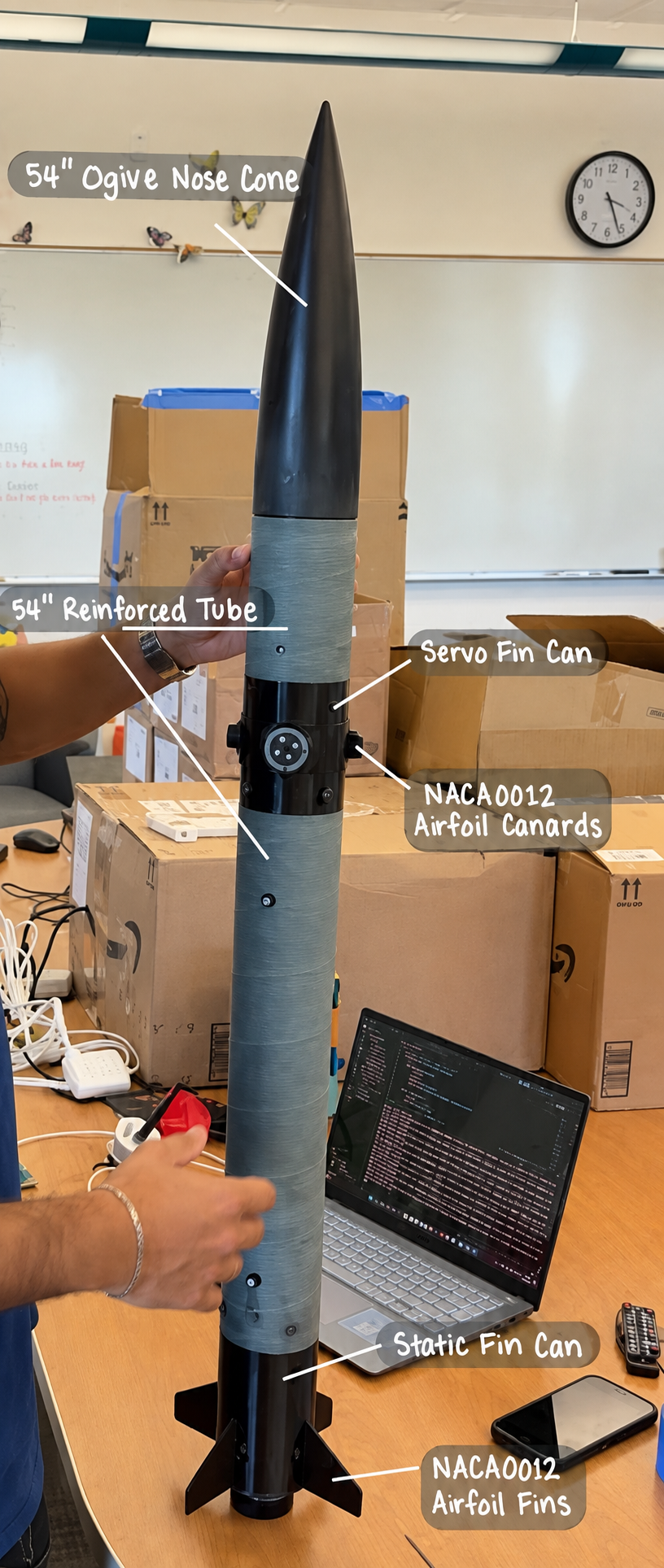
Thrust Stack's airframe uses active canards to correct roll in flight, but the flight control team had no data on how much roll torque a given deflection actually produced at a given airspeed. Without that relationship, the controller had no way to turn a commanded correction into an actual canard angle.
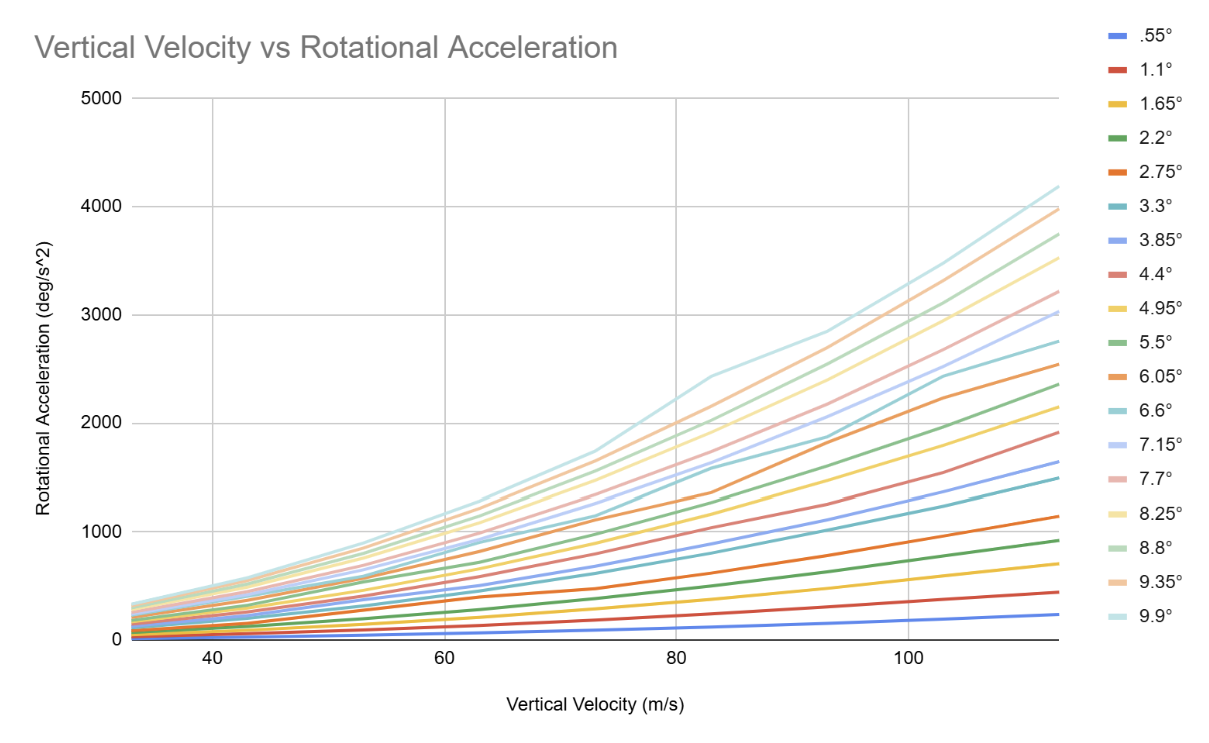
The dataset had to hold up across the vehicle's full flight envelope, deflection from 0.55 to 9.9 degrees and freestream velocity from 33 to 113 m/s, since roll authority changes with both.
Approach
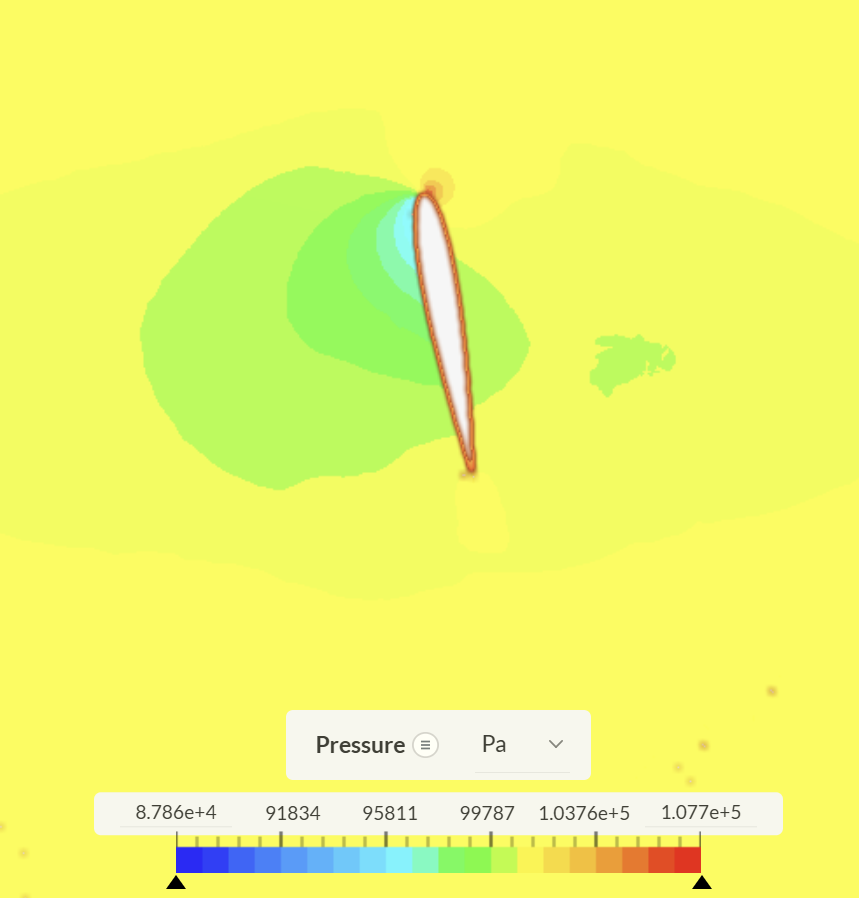
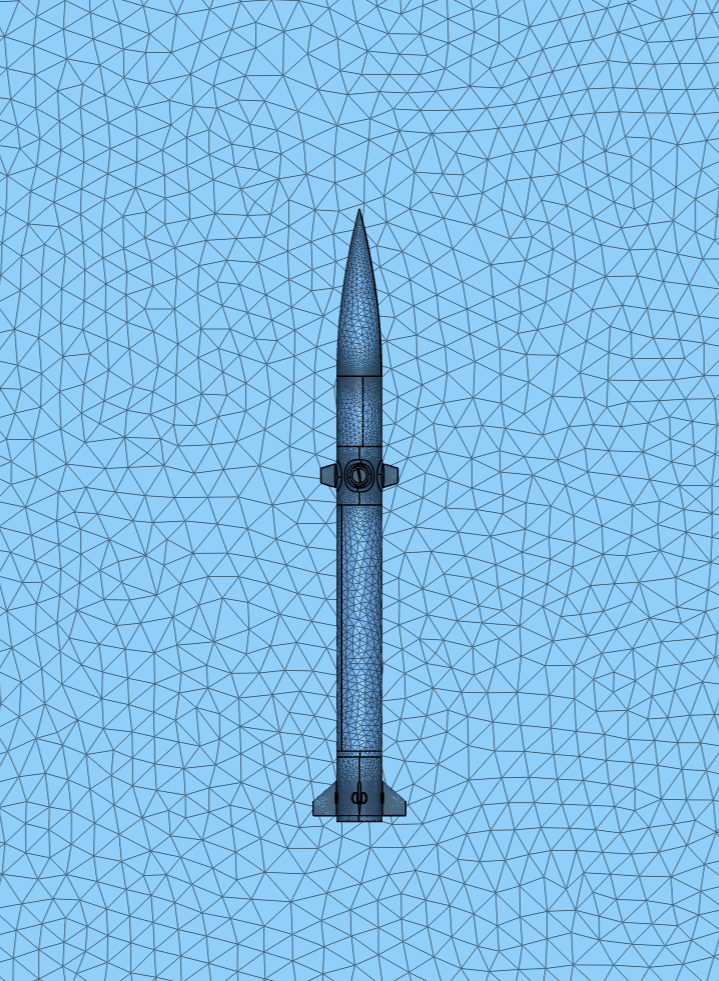
Built a SimScale sweep across the full deflection and velocity range, running 244 cases and about 6,200 core-hours of simulations.
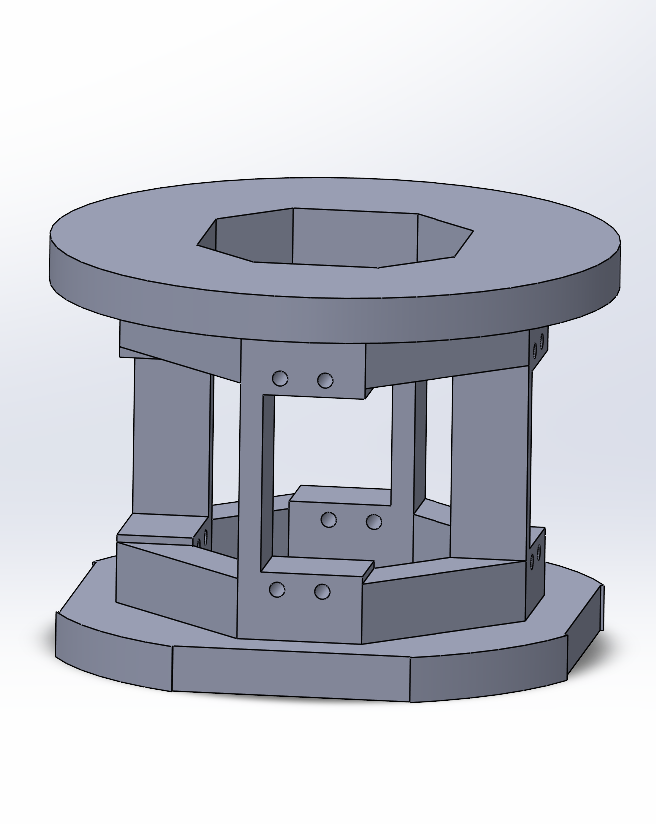
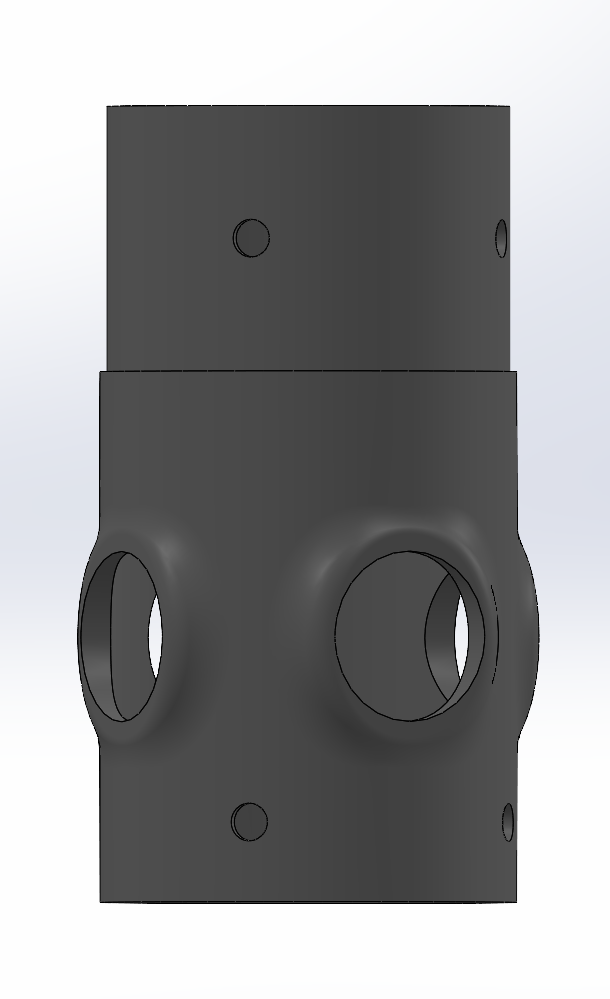
The first canard geometry generated too much torque per degree of deflection for the controller to make fine corrections near small angles, so after reviewing the early sweep data, I scaled the canards down ~30% smaller than the original to trade peak torque for finer resolution. I also designed and manufactured a custom servo mount in SolidWorks, sized to sit flush with the airframe so the actuation hardware would not add parasitic drag.
Result
Converted the 162-point roll torque coefficient dataset into angular acceleration using the airframe's roll moment of inertia, then delivered it to the flight control team as the lookup table the controller reads against commanded deflection and measured rocket speed. Every point in that dataset only qualified once mesh refinement drove its roll torque coefficient to within 5% of the previous cell count.
The conversion held up cleanly to a maximum deflection of 15 degrees, which now sets the controller's usable range. The custom servo housing paid off aerodynamically too: sitting flush with the airframe instead of exposed cut the rocket's drag coefficient by 21%. The rocket is scheduled to fly in January 2027 at the Friends of Amateur Rocketry site in the Mojave Desert, California.
Here is a live demonstration of canard actuation: