- Team
- Personal build
- Role
- Designer and fabricator
- Scope
- Full airframe design, printing, and flight, pre-certified by a NAR Level 3 mentor before launch
- Constraints
- NAR high-power requirements, under 600 grams, geometric symmetry under OpenRocket-simulated flight loads
- Tools
- Fusion 360, OpenRocket, FDM (PETG-CF, Bambu Lab P1S)
- Status
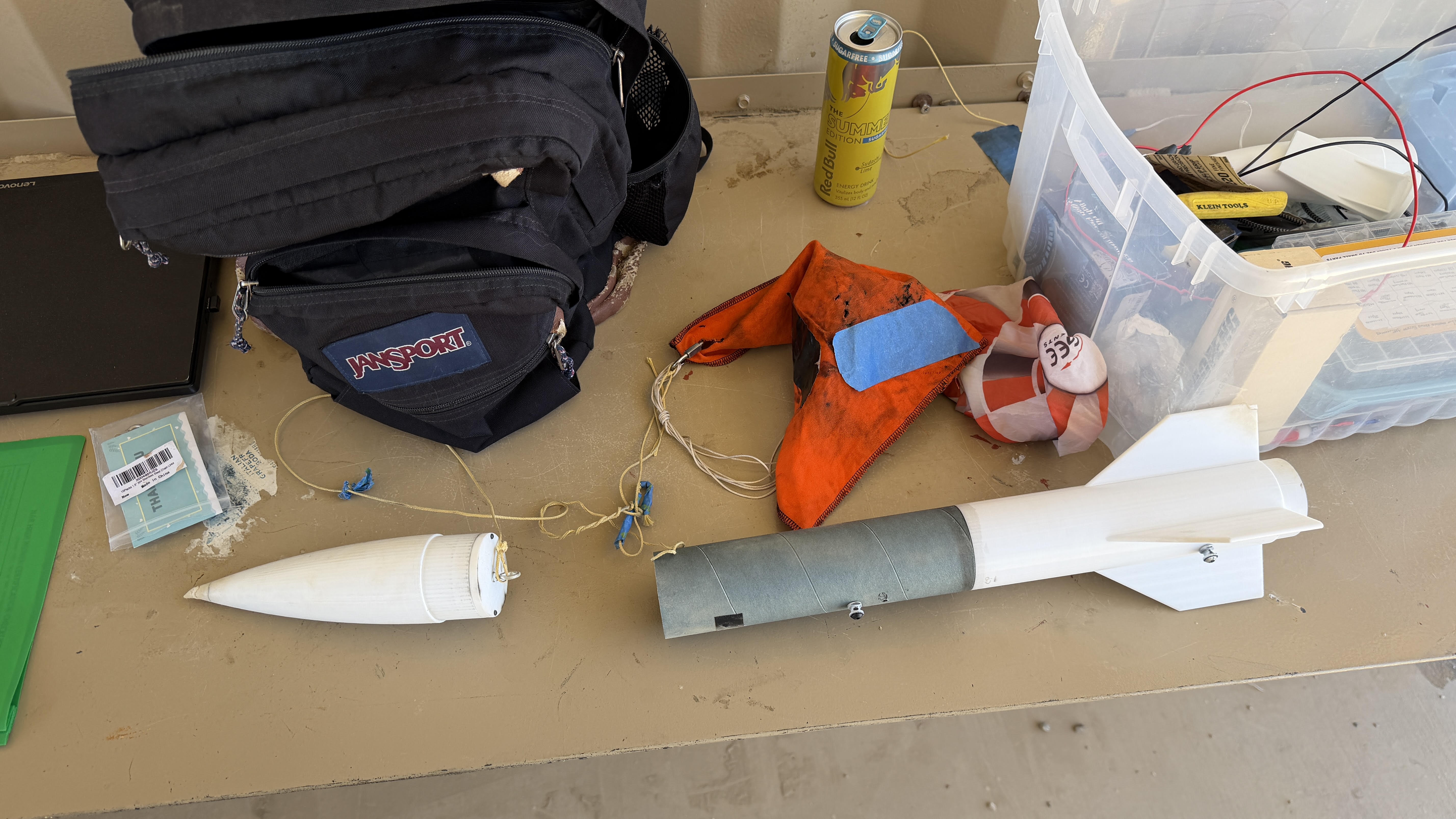
- Stable Mach 0.747 flight to 4,600 ft, recovered without critical damage, NAR Level 1 High-Power Certification earned
Objective
The goal was to design, manufacture, launch, and recover a rocket to earn my National Association of Rocketry (NAR) Level 1 High-Power Certification. Beyond that, I set my own performance target: keep the airframe under 600 grams without giving up the structural rigidity a high-power motor demands.
Getting there meant clearing two separate bars. The airframe had to meet all NAR high-power requirements and pass a preflight inspection from a NAR Level 3 member, and the flight itself had to end in a recovery clean enough to leave no flight-critical damage. Missing either one meant the attempt failed, regardless of how well the rest of the build performed.
Approach
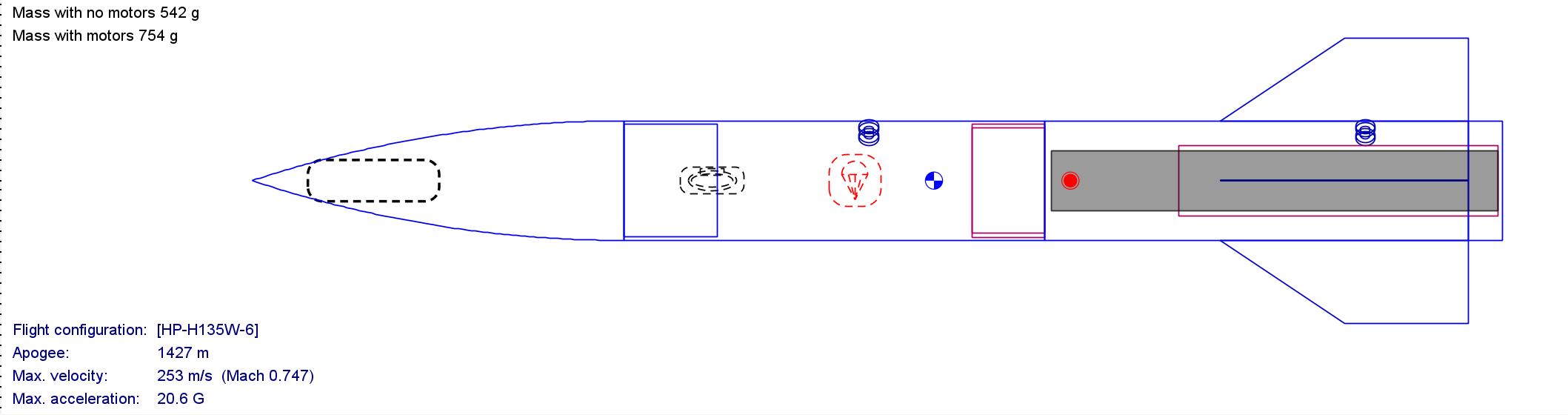
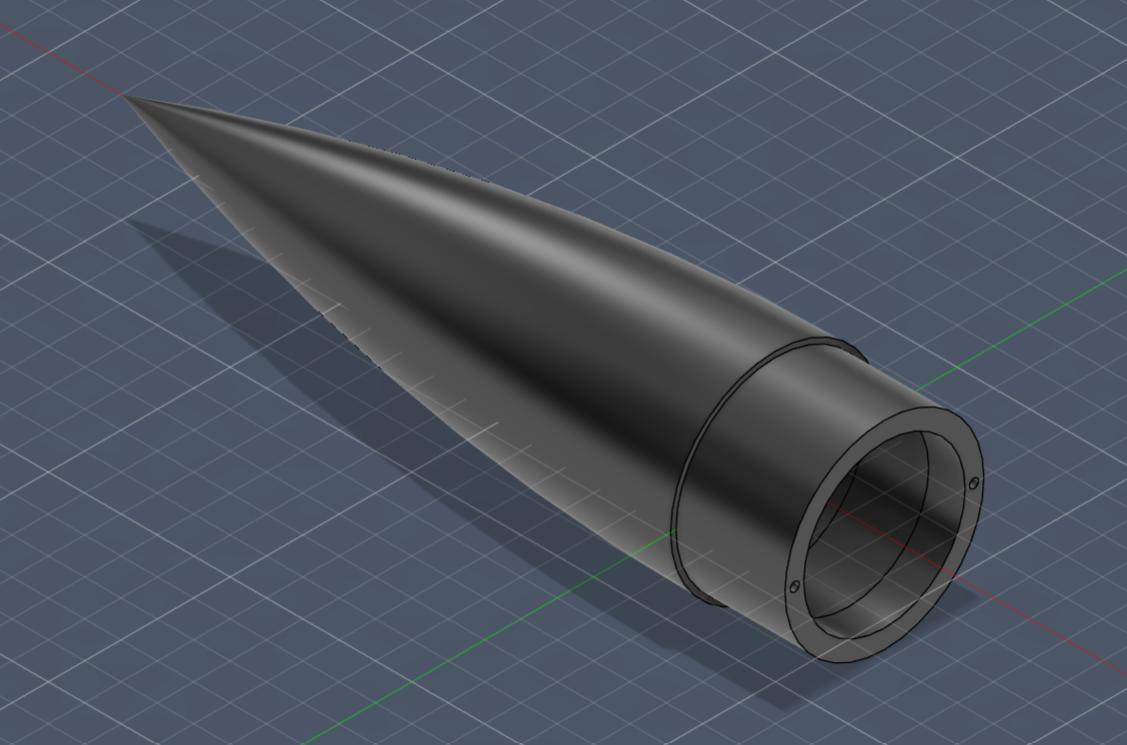
Modeled the airframe in OpenRocket first, then moved into Fusion 360 to design the individual components for FDM printing. I tested a few different fin geometries and thicknesses, as well as print materials before settling on PETG-CF. It held up under simulated flight loads without pushing the rocket over the 600 gram target.
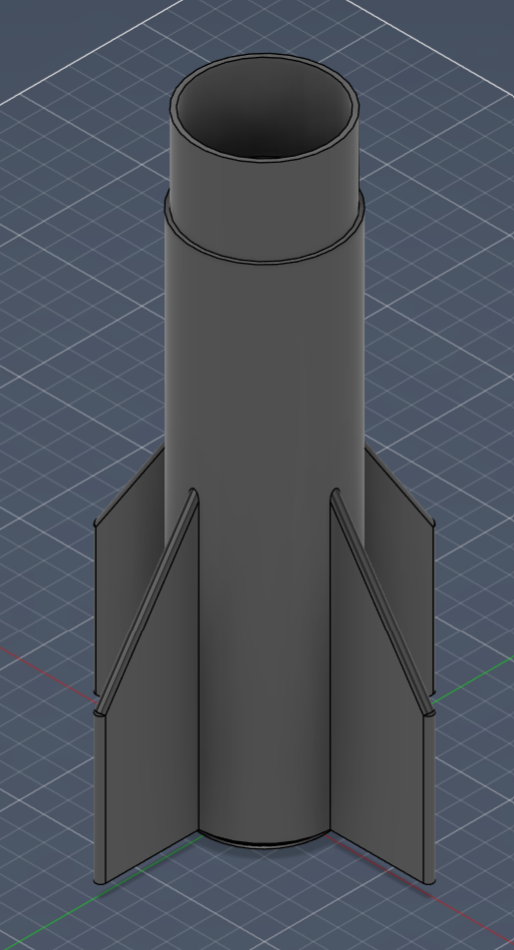
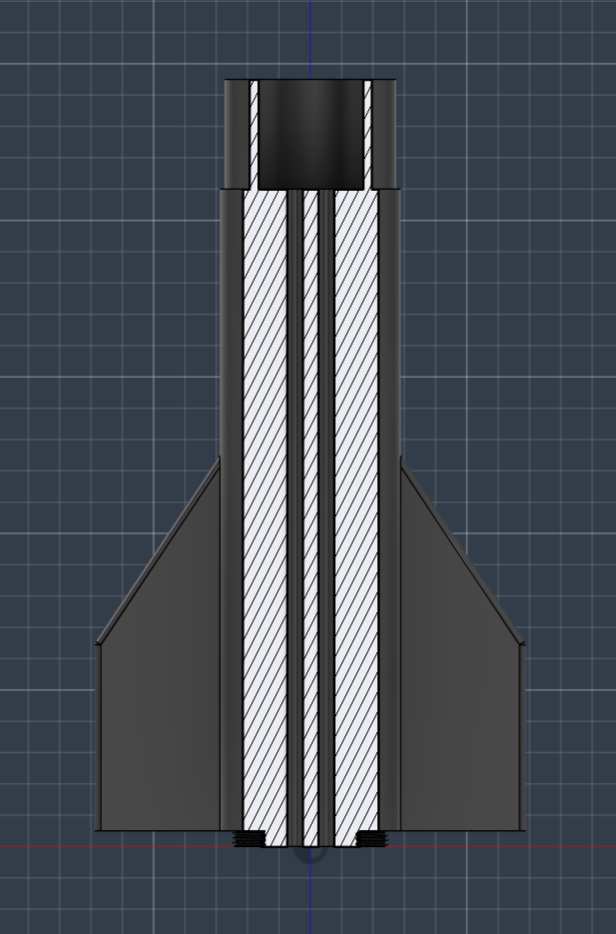
The first launch attempt failed on recovery. The parachute detached from the airframe, and the rocket free-fell and could not be recovered. I redesigned the fin can from the ground up, integrating the recovery system and motor retainer into one design. I ran the shock cord the full length of the fin can and looped it back around itself so there was no way for it to separate from the airframe short of actually cutting it.
Result
The redesigned recovery system held up perfectly on the second attempt. The rocket flew a stable profile to Mach 0.747 and 4,600 ft, then came down and was recovered without any flight-critical damage.
That flight, combined with a preflight inspection from a NAR Level 3 mentor covering structural rigidity, construction and assembly, and motor retention and tolerancing, earned me my NAR Level 1 High-Power Certification, meeting the objective in full.